
Decoding JDM Auction Sheets: What to Look For

Decoding JDM Auction Sheets: The Ultimate Guide
Welcome to the Ultimate JDM Auction Sheet Guide!
If you're considering buying your next/browse-inventoryJapanese Domestic Market (JDM) vehicle, by the end of this post, you’ll be able to read a JDM auction sheet like a pro, ensuring your next JDM buy is as smooth as/browse-inventoryGT-R34 with a high-flow cat!
Let's get started.
What Is a Japanese Auction Sheet?
An auction sheet is a standardized JDM vehicle report that provides a detailed inspection of a vehicle’s condition. It’s created by independent inspectors at Japanese auction houses to help buyers like you accurately and confidently assess vehicles without actually being physically present.
Auction sheets are trustworthy documents generated by independent inspectors in Japan, adhering to strict industry standards. They are widely regarded as reliable due to the credibility and integrity of Japanese auction houses. These sheets are designed to provide buyers with a transparent and accurate assessment of a vehicle's condition, ensuring informed purchasing decisions.
What’s Included in an Auction Sheet?
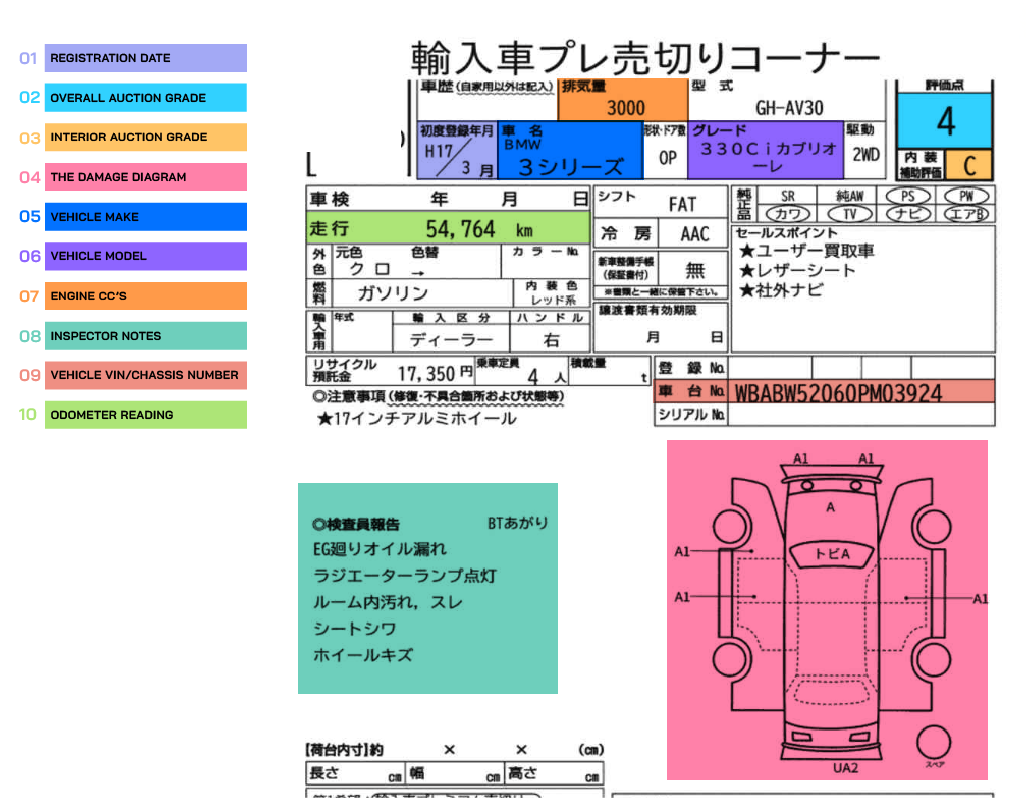
Auction sheets typically include the following fields, each offering critical insights into the vehicle:
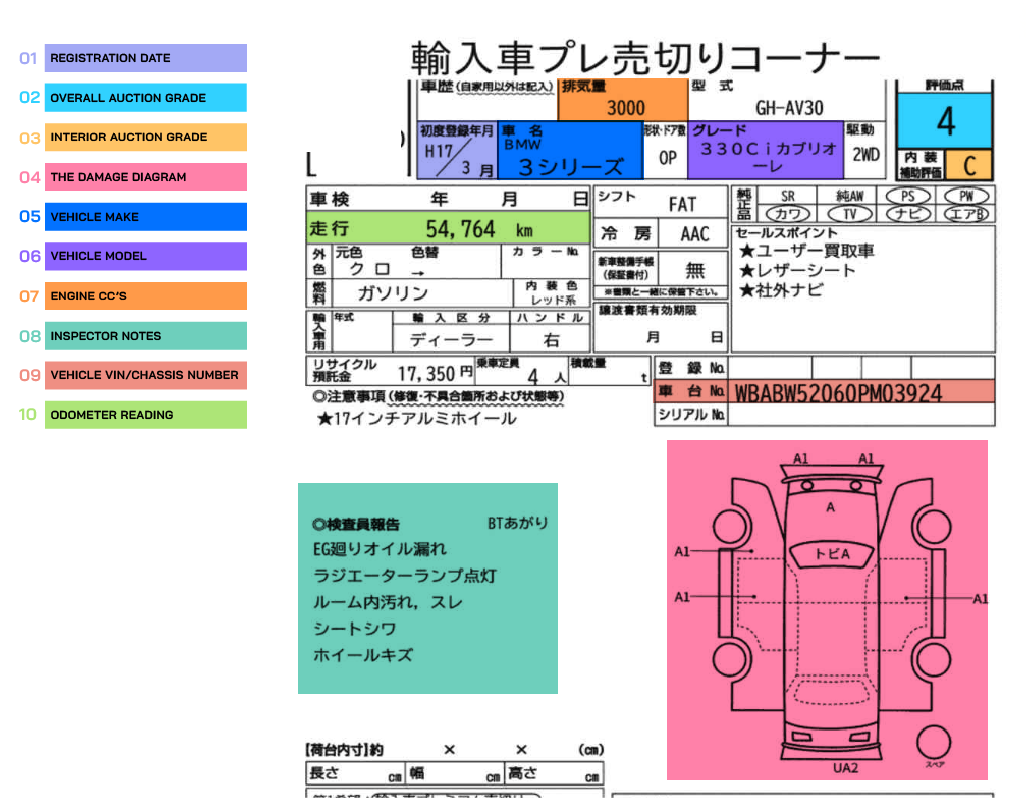
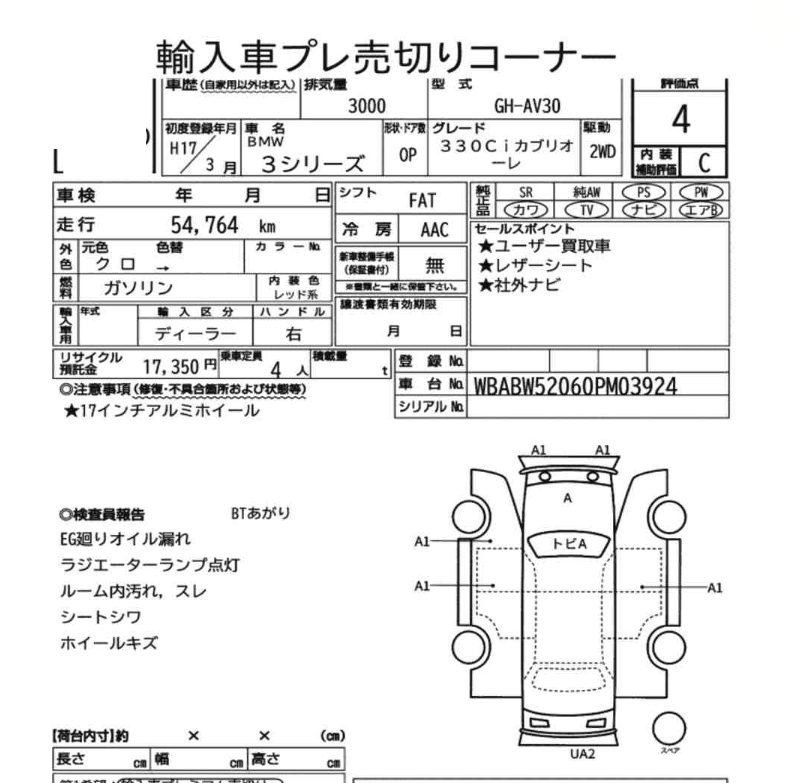
Real World Example: 2005 (H17/3) BMW 3 Series Auction Sheet
To help us decode each section - let’s break down this auction sheet for a 2005 BMW 3 Series that was recently up for auction on USS Ninja - Japan's largest auction house. This will give you a real-world example of how an auction sheet is structured and a more detailed explanation of the sections of the sheet provide vital information.
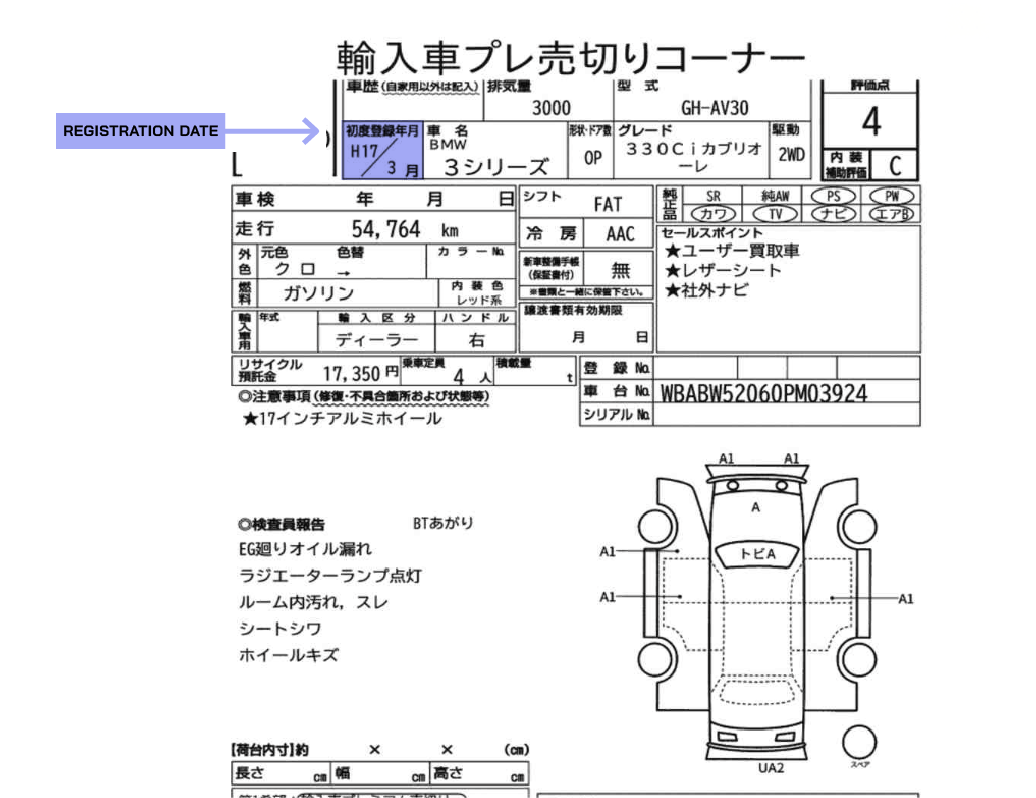
Decoding Section #1. Registration Date
One of the most critical pieces of information on a Japanese auction sheet is the registration date, typically written in the format "H17/3" and found in the very top left corner of the sheet. This letter/number code provides the year and month of the vehicle’s first registration. Understanding this system is vital, as it determines if a vehicle is eligible for import into Canada or the United States.
A Brief History of the Japanese Calendar System
Japan’s calendar system is based on the era of the reigning emperor. Each era has a unique name, and the years reset to 1 at the beginning of a new era. For example:
To determine the vehicle’s manufacturing year, you’ll need to convert the Japanese year to the Gregorian calendar:
Example Conversion
If the registration date is H17/3:
By following this method, you can confidently determine the vehicle’s eligibility for import and its historical context.
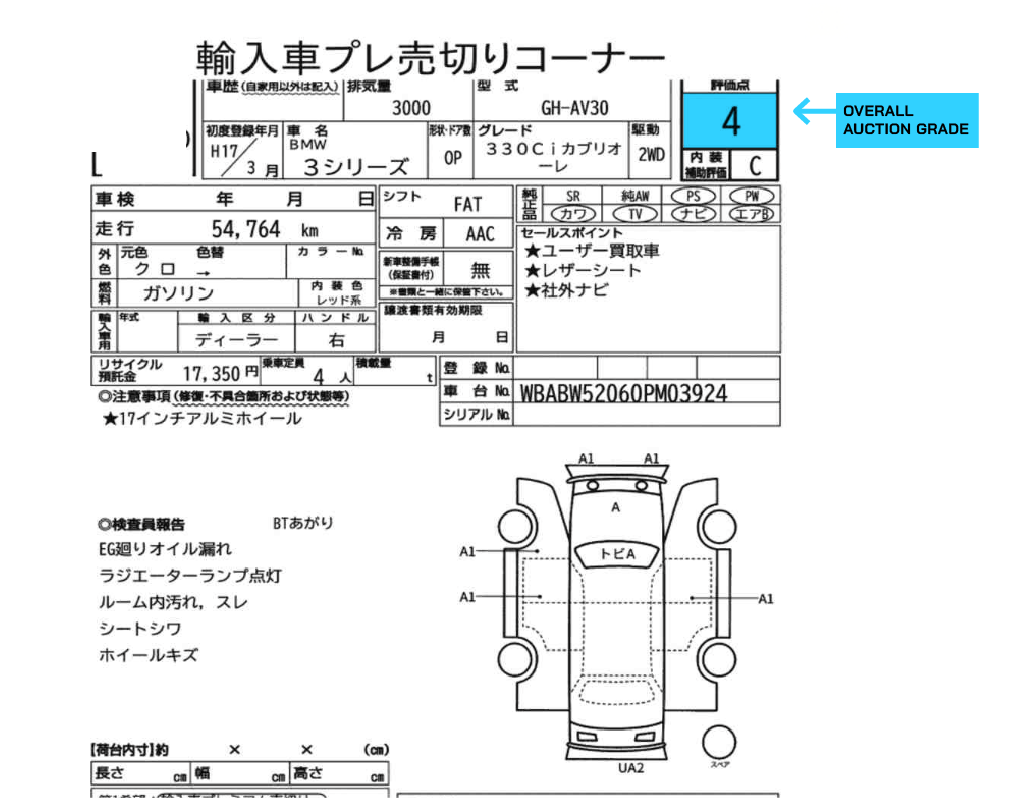
Decoding Section #2. Overall Auction Grade
The exterior auction grade numbers summarize the overall exterior condition of the vehicle.
Let’s break down what each grade means:
Grade 5
Grade 4.5
Grade 4
Grade 3.5
Grade 3
Grade 2
Grade 1
Grade R
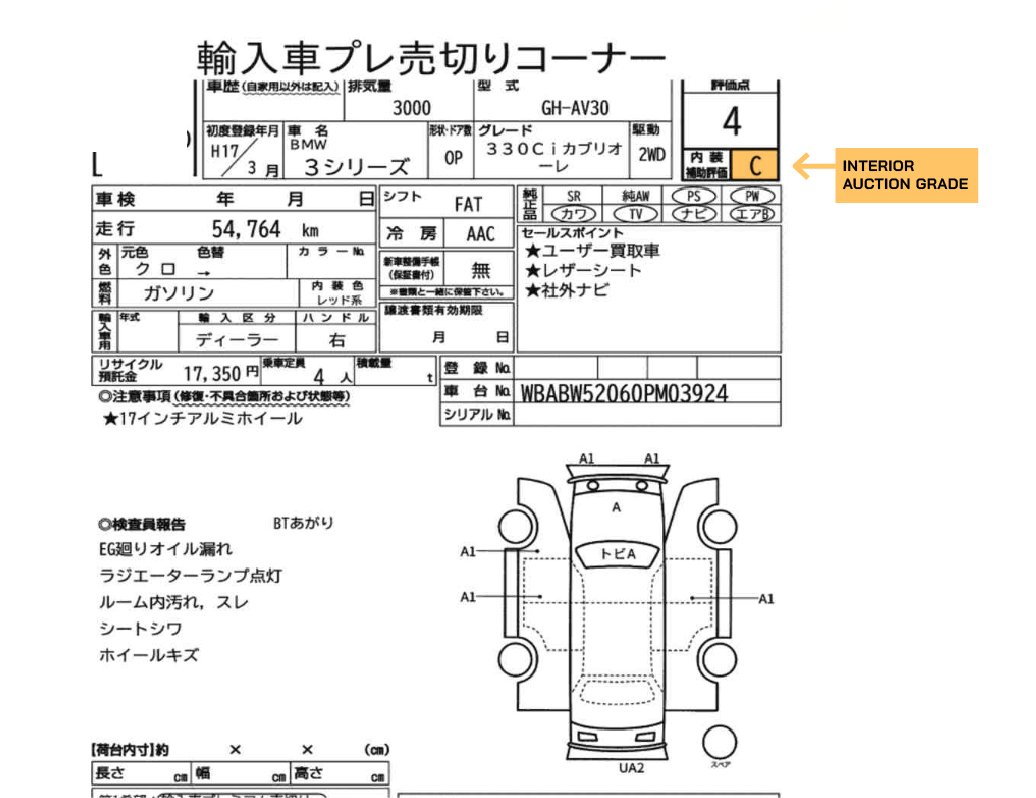
Decoding Section #3. Interior Auction Grade
Interior grades provide insight into wear and cleanliness of the vehicle:
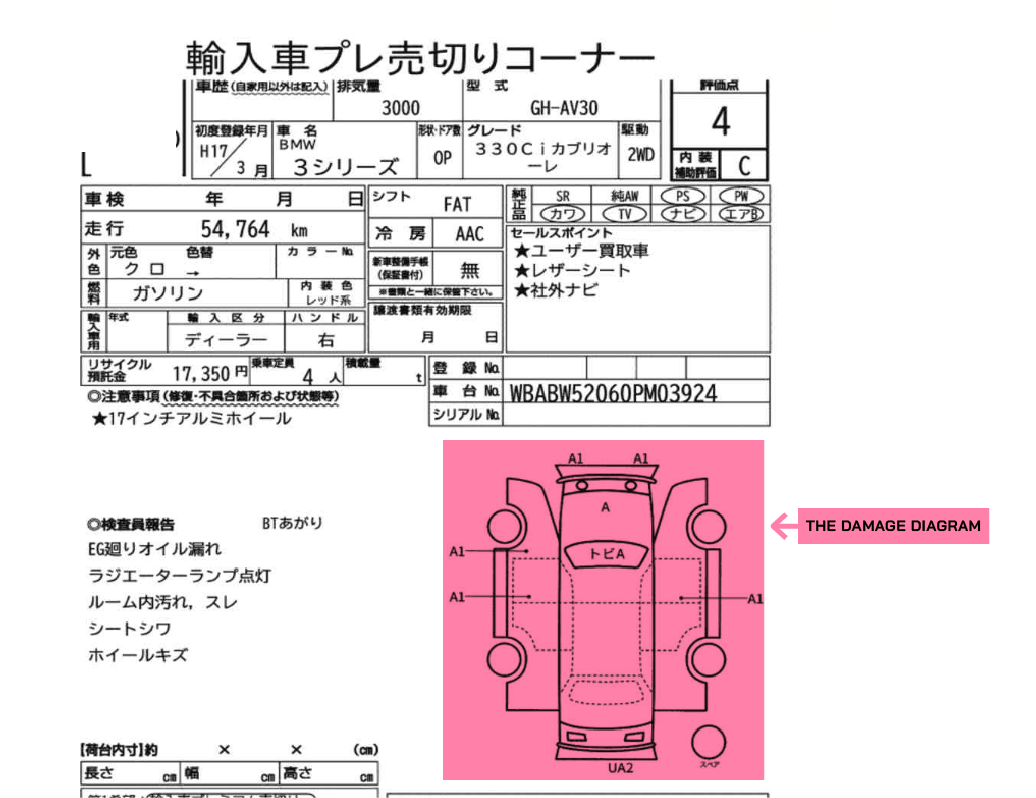
Decoding Section #4. The Damage Diagram
A diagram on the auction sheet highlights defects using:
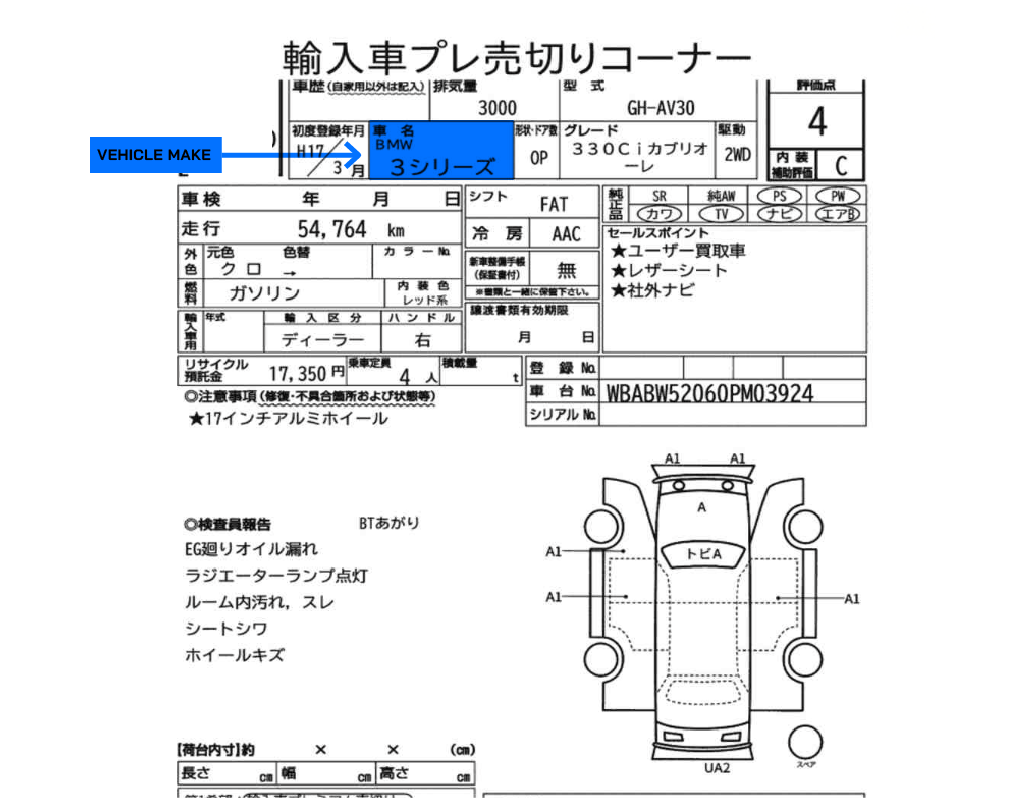
Decoding Section #5. Vehicle Make
This section identifies the manufacturer of the vehicle. On the auction sheet, it is typically located to the right of the registration date. For example, in our BMW 3 Series example, the Make is BMW. This section ensures buyers know exactly who produced the car and can cross-reference this with their research on the specific manufacturer.
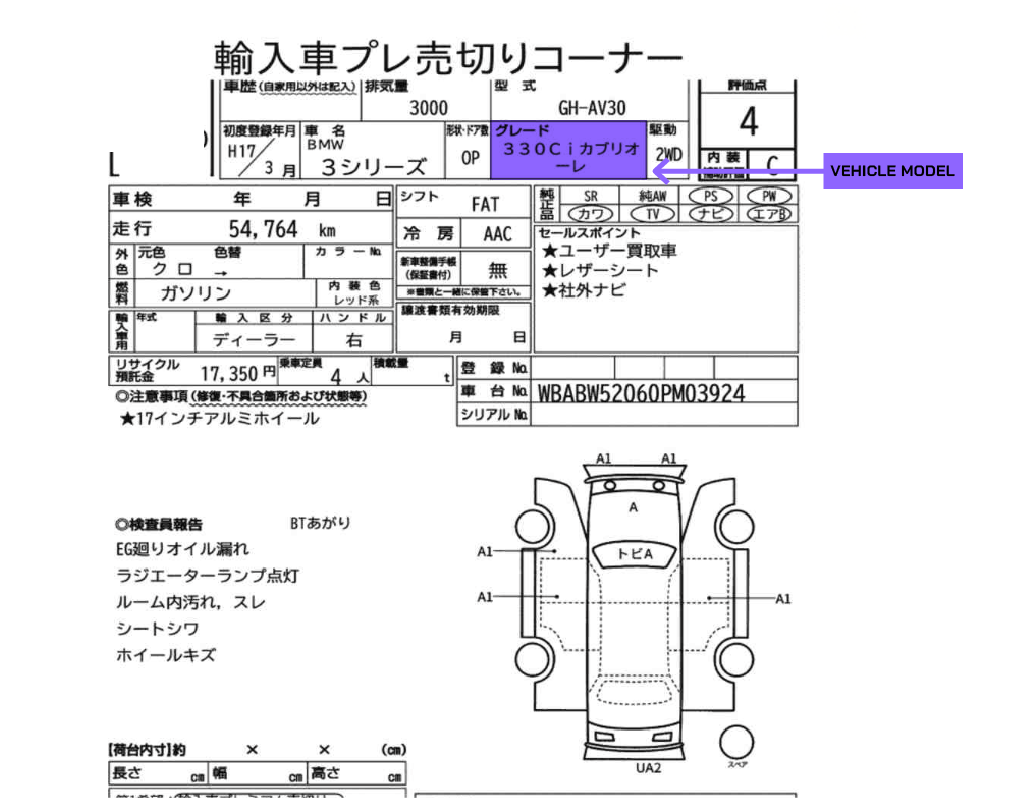
Decoding Section #6. Vehicle Model
Directly next to the Make section, the Model specifies the exact version of the car. For example, in our BMW 3 Series example, the Model is 3 Series. This is essential for identifying whether the vehicle meets your expectations, as manufacturers often produce multiple variations within a model line.
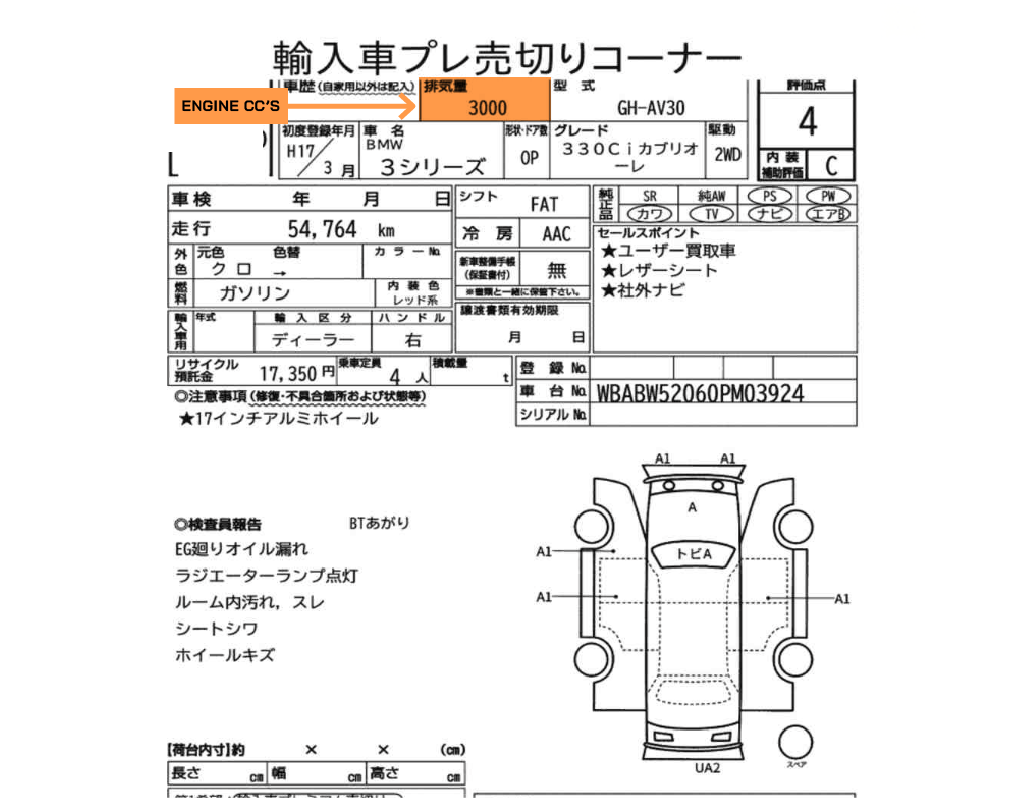
Decoding Section #7. Engine CC’s
This section provides the engine displacement, measured in cubic centimeters (CC). In our example, the BMW 3 Series has a 3000 CC engine, which translates to a 3.0-liter engine. This information is critical for determining the car's power and performance capabilities.
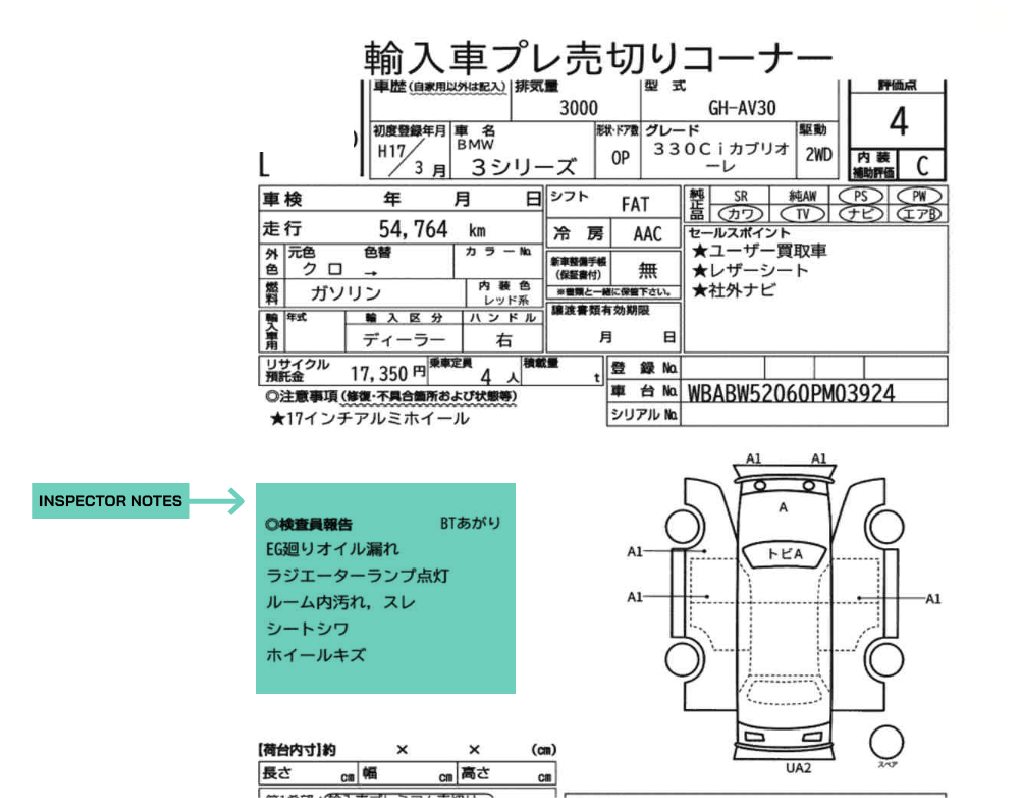
Decoding Section #8. Inspector Notes
Located at the bottom-left corner of the auction sheet, this section contains detailed observations from the inspector. These notes often highlight mechanical issues, cosmetic damage, or unique features. Since the notes are written in Japanese, just ask us to translate this section for you, or give Google Translate a try here.
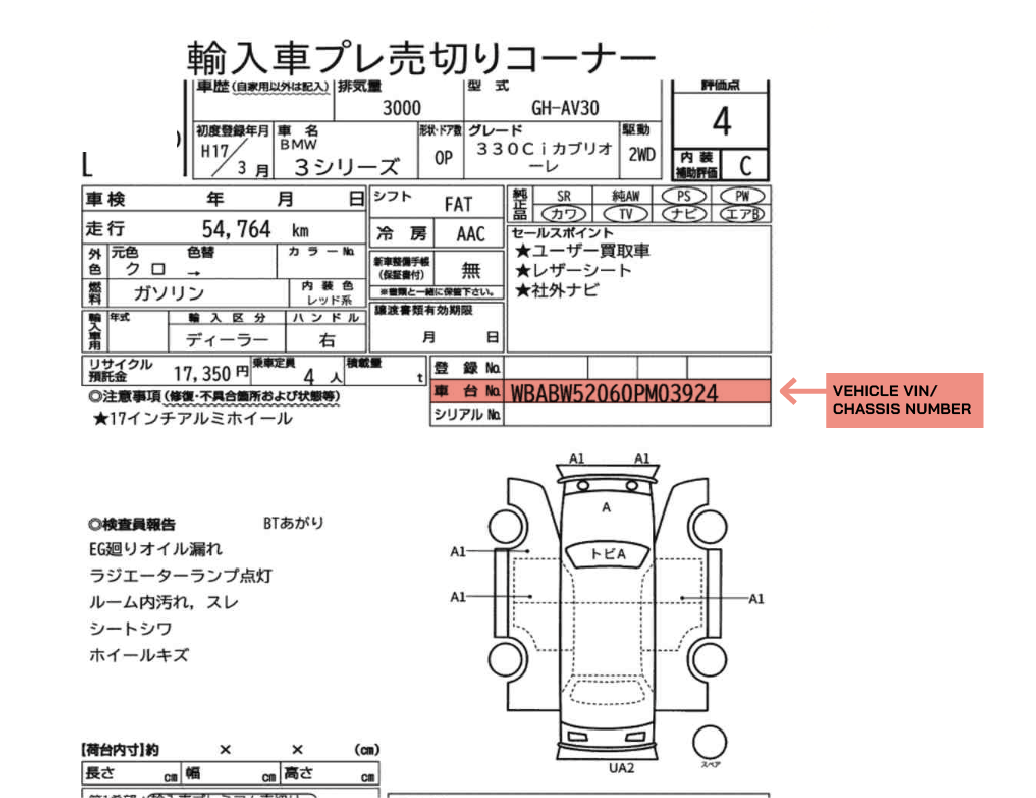
Decoding Section #9. Vehicle VIN/Chassis Number
Unlike North American vehicles that have Vehicle Identification Numbers (VINs), JDM vehicles use a **Chassis Number **to identify the car. The chassis number is typically located just above the damage diagram on the auction sheet. This identifier is critical for verifying the vehicle's history and ensuring it matches auction records. While it serves a similar purpose to a VIN, the chassis number format may differ, so it’s essential to familiarize yourself with its structure when importing a JDM vehicle.
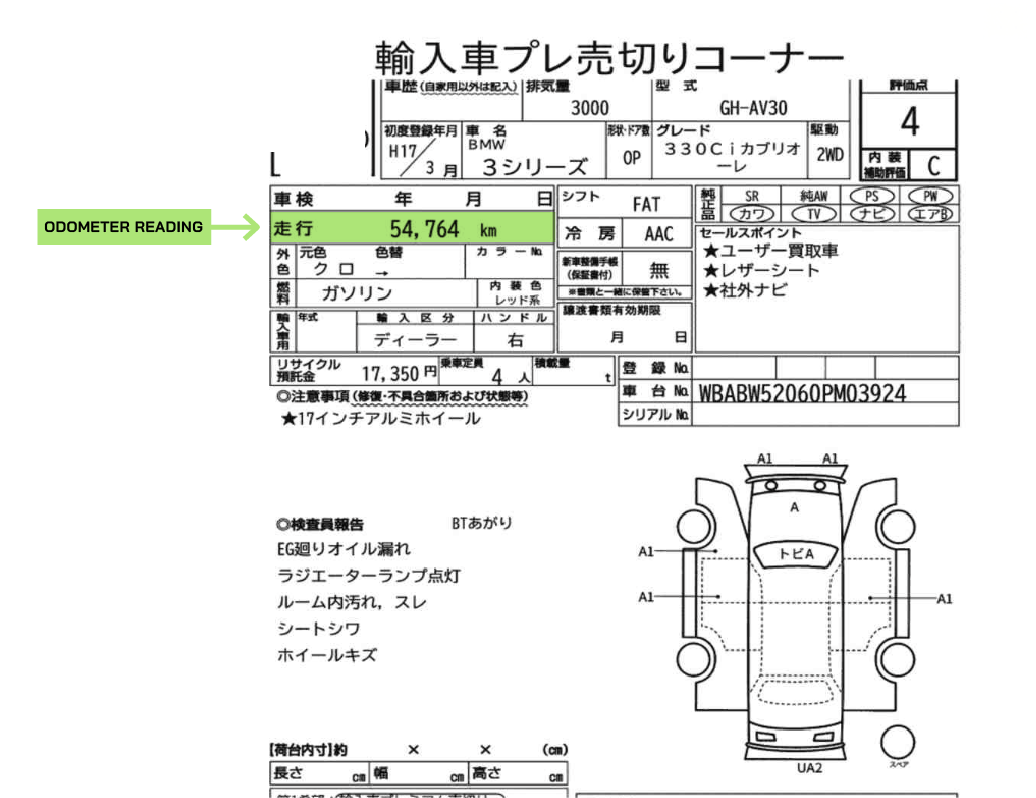
Decoding Section #10. Odometer Reading
The odometer reading on a Japanese auction sheet reflects the total kilometers the vehicle has traveled and is a critical indicator of its usage and potential wear. Typically displayed prominently, the mileage may sometimes include symbols that provide additional context. For example, an asterisk (*) next to the mileage indicates uncertainty about the accuracy of the reading, often due to odometer replacements or discrepancies in recorded data. A dollar sign ($) suggests the mileage has been verified as accurate despite a replacement or modification. Inspecting this section carefully is essential, as higher mileage can mean more wear, while inconsistencies might warrant further investigation. Understanding these symbols ensures you’re fully informed about the vehicle’s history before making a purchase.
Things to Look for in a JDM Auction Sheet
Knowing what to focus on can really help you decide if the vehicle fits your specific criteria for what you’re looking for in a JDM car. Here are key areas to pay attention to and some general advice on what this means in the big picture when assessing the overall condition of the JDM vehicle:
Red Flags to Watch For
Non-Deal-Breakers
Understanding these details will help you differentiate between minor, fixable issues and significant red flags, making you a more confident buyer.
Check out our other blog post here to learn more about JDM auction sheets!
At JDM Rush We Make Auction Sheets Make Sense.
So there you have. it! Interpreting a Japanese auction sheet isn’t as straightforward as it seems. With detailed diagrams, codes, grades, and handwritten inspector notes (often in Japanese), it’s easy to feel overwhelmed. Missing even a small detail could lead to costly surprises, like hidden rust, significant repairs, or mileage discrepancies.
Let JDM Rush Imports Simplify the Process
At JDM Rush Imports, we specialize in making the auction sheet decoding process seamless and stress-free. With our expertise, you’ll never have to worry about missing critical details or making a costly mistake.
Here’s how we can help:
We Are JDM Rush Imports
Every great car has a story. Let us help you write yours.
Whether you know exactly what you want or you're just starting to explore, we make importing a vehicle from Japan simple, honest, and exciting. Real cars, real photos, real pricing — and one person guiding you the whole way.
Related Posts
How to Read Japanese Auction Sheets When Importing JDM Cars
How to Read Japanese Auction Sheets When Importing JDM Cars JDM Auction Sheet Importing a JDM car to Canada is a dream for many...

The History of the Shaken
The History of the Shaken When I first fell in love with JDM cars over 30 years ago, I immediately saw performance and artistry at work....

The R35 GT-R Gold Rush: Why Early 2011 Models Are Your Best Value Play Right Now
The 15-year import clock just struck midnight on 2011 Nissan GT-R R35s. While everyone chases R32/R33/R34 Skylines at inflated prices, early R35 models offer superior reliability, parts availability, and performance for significantly less. Here's why smart buyers are moving now—before the R36 launch drives prices up.